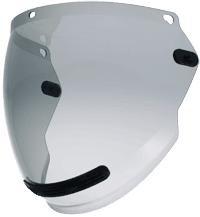
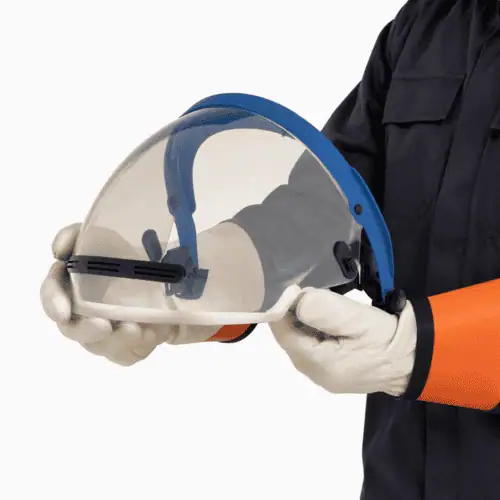
A Guide to Face & Eye PPE Inspection and Retirement
Face shields are designed for demanding environments, but even durable personal protective equipment requires regular evaluation. Scratches, cracks, damaged hardware, contamination, and general wear can affect whether equipment remains suitable for the job. For safety managers and workers, the question should not simply be, “How old is this face shield?” A more useful question is: […]
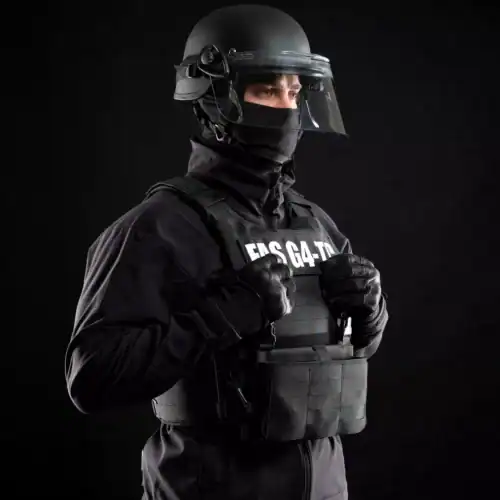
Understanding Impact Protection Levels in Paulson Tactical Shields
When law enforcement, military personnel, and tactical teams face unpredictable threats, selecting the correct protective equipment for the mission is critical. Not all tactical face shields and body shields deliver the same level of protection. Differences in impact ratings, shield thickness, fragmentation performance, and overall coverage can significantly influence operator safety in the field. Impact […]

A Guide to NFPA 1970: Understanding the New Firefighter PPE Requirements
The fire service has entered a new era of personal protective equipment (PPE) standards with the adoption of NFPA 1970. This comprehensive standard consolidates structural firefighting gear, proximity firefighting ensembles, station uniforms, open-circuit self-contained breathing apparatus (SCBA), and personal alert safety systems (PASS) into a single, cohesive document to ensure all PPE works safely together. […]

Engineered for Extreme Heat (Part 2 of 2): Helios™ Heat Reflective Face Shields—Balancing Thermal Performance with Cost Effectiveness
In molten metal environments, effective face and eye protection must do more than meet minimum standards—it must perform reliably under extreme thermal stress while maintaining visibility and worker confidence. OSHA requirements and ANSI Z87.1 standards provide the framework for protection, but real-world conditions in steel mills and foundries demand continuous innovation. For decades, Paulson Manufacturing […]

Engineered for Extreme Heat (Part 1 of 2): Aylon™ Redefines Cap Bracket Technology
In molten metal operations, where radiant temperatures can exceed 2,000°F, face and eye protection is not simply best practice—it is a critical requirement for worker safety and regulatory compliance. OSHA mandates appropriate personal protective equipment (PPE) for employees exposed to thermal hazards, while ANSI Z87.1 establishes rigorous performance criteria for eye and face PPE used […]

Arc Flash Face and Eye Protection: Key Considerations for Safety and Performance
Electrical work exposes personnel to one of the most severe occupational hazards: the arc flash. Selecting appropriate arc flash face and eye protection is not simply a matter of comfort or convenience-it is a critical control that directly impacts injury severity and long-term safety outcomes. For electrical workers and safety managers, several technical and regulatory […]
Tags: arc flash safety

Welding Applications and Eye Hazards: A Guide to Proper Protection
Welding operations vary widely in process, energy output, and material interaction-but all share a common risk: exposure to intense optical radiation that can cause serious, and often irreversible, eye injury. For welders and safety professionals, understanding the nature of each welding application is critical to selecting appropriate eye protection that meets regulatory and performance standards. […]

Women in Manufacturing: From Assembly Line to Executive Office
During Women’s History Month, it’s important to recognize leaders who are shaping industries traditionally dominated by men. One such leader is Miriam Mesina de Gutierrez, president of Paulson Manufacturing. Her career is a powerful example of how opportunity, perseverance, and dedication can create pathways to leadership in American manufacturing. From the Assembly Line to the […]

Tactical PPE Add-Ons That Make a Big Difference
In high-risk tactical environments, primary PPE like helmets and face shields get most of the attention. But it’s often the smaller components that deliver the biggest gains in safety, comfort, and performance. These “add-ons” transform standard protective gear into mission-ready systems—giving end users greater adaptability. Laser & High Intensity Light Protection Laser threats are no […]

Ensuring a Perfect Fit: Accessory Compatibility Considerations for Type 2 Safety Helmets
Why Compatibility Matters in Type 2 Helmet Systems Ensuring a perfect fit between helmets and accessories like face shields, goggles, and hearing protection, is essential to worker safety — particularly when using Type 2 helmets, which are designed to protect against both top and lateral impacts. As job sites increasingly rely on modular PPE configurations, […]