A Guide to Face & Eye PPE Inspection and Retirement
Comments Off on A Guide to Face & Eye PPE Inspection and Retirement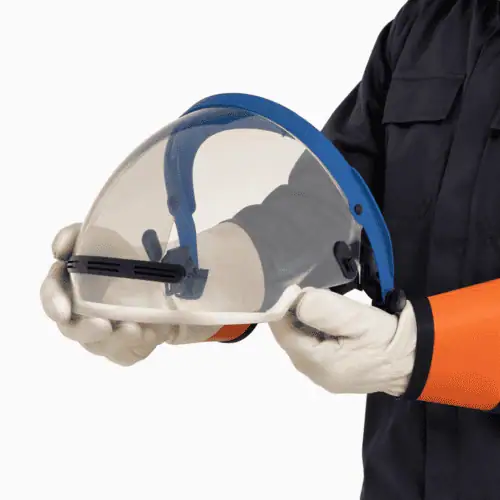
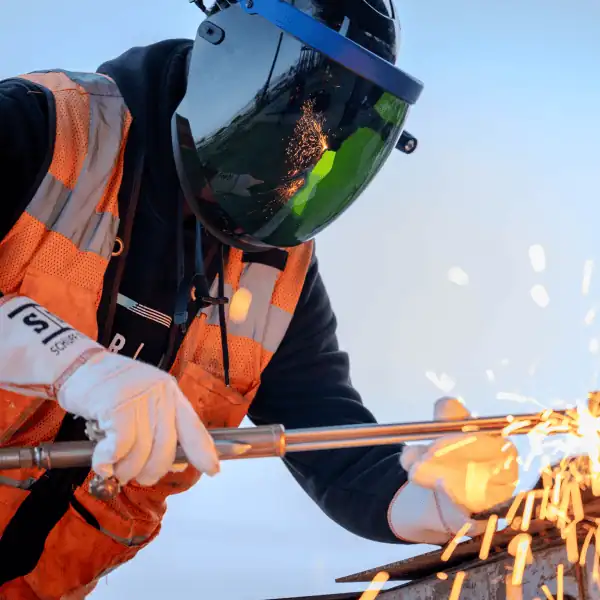
Face shields are designed for demanding environments, but even durable personal protective equipment requires regular evaluation. Scratches, cracks, damaged hardware, contamination, and general wear can affect whether equipment remains suitable for the job.
For safety managers and workers, the question should not simply be, “How old is this face shield?” A more useful question is: “Is this equipment still in reliable condition and appropriate for the hazard?”
Under OSHA 29 CFR 1910.132, PPE must be maintained in a sanitary and reliable condition, and defective or damaged PPE must not be used. OSHA training requirements also address proper PPE care, maintenance, useful life, and disposal.

1. Inspect the Shield

Start with the viewing area. Look for visible deterioration such as cracks, deep scratches, deformation, or clouding. Visibility matters when performing detailed industrial tasks, and the condition of the shield should be evaluated accordingly.
In the article An Intro to the ANSI Z87.1 Safety Standard for Face & Eye Protection, additional background is provided on impact resistance, optical clarity, coverage, and product markings associated with ANSI Z87.1.
2. Inspect Other Components
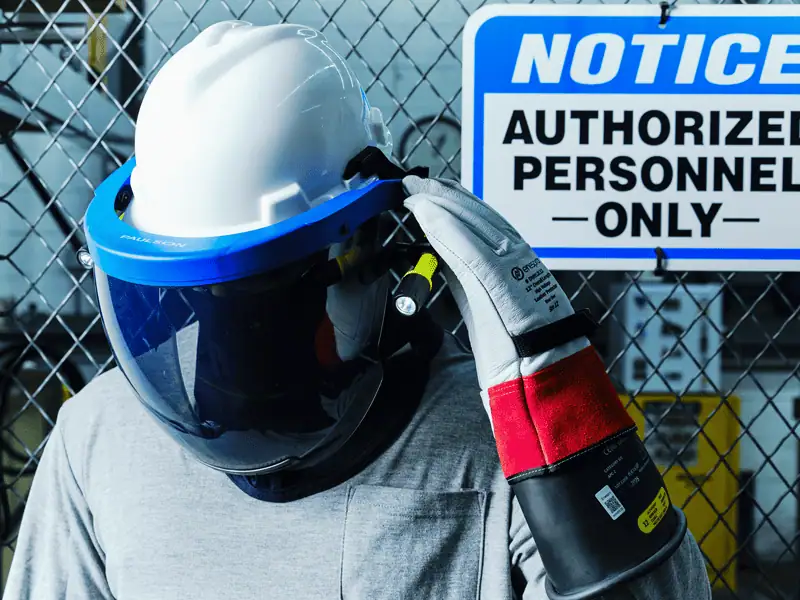
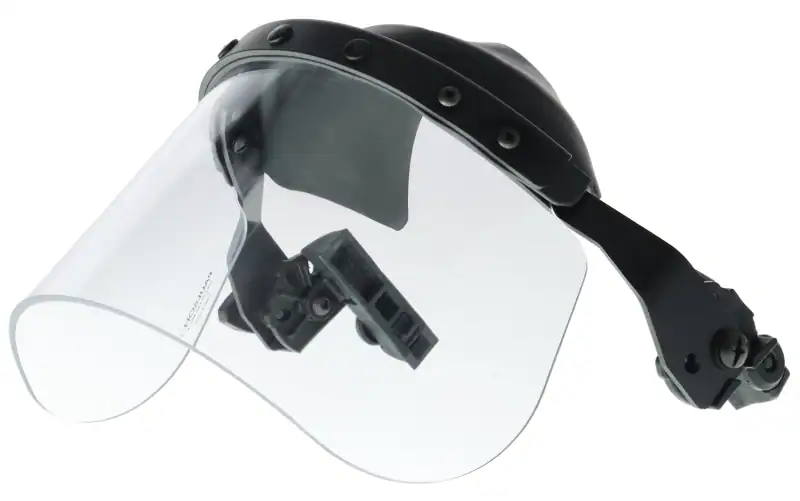
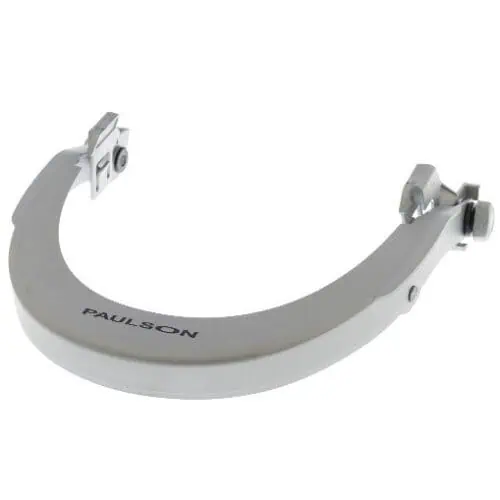
The shield is only one part of a face protection system. As a recommended inspection practice, examine the bracket, attachment points, fasteners, pivots, and other components for visible damage or excessive wear.
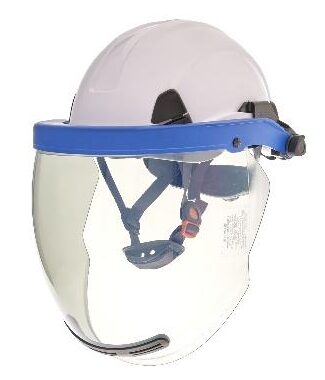
System configuration also matters. How Toric Face Shields Improve Compliance Without Sacrificing Protection discusses how face-shield design, brackets, visibility, comfort, and durability contribute to PPE usability.
3. Know the Difference Between Dirty and Damaged
Contamination and physical damage are not the same issue. Some visibility problems may be addressed through proper cleaning, while cracks or permanent deterioration require a different response.
PPE should be kept clean and serviceable. OSHA training material specifically notes that proper fitting and maintenance in a clean, serviceable condition help reduce the possibility of PPE failure. Always follow the manufacturer’s instructions for cleaning, maintenance, inspection, and replacement.
4. Reevaluate PPE After an Incident
As a recommended safety practice, a face shield exposed to an impact or other unusual event should receive additional evaluation before being returned to service.
The regulatory baseline is straightforward: OSHA 29 CFR 1910.132 states that defective or damaged PPE shall not be used.
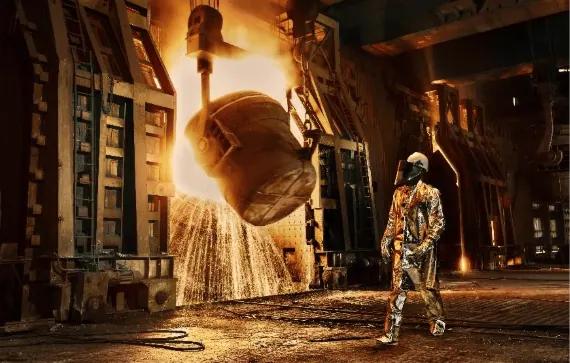
For specialized applications, the relevant hazard remains critical. For example, OSHA’s 29 CFR 1910.133 Eye and Face Protection requires appropriate eye or face protection for hazards including flying particles, molten metal, liquid chemicals, chemical gases or vapors, and potentially injurious light radiation.
5. Don’t Rely on Age Alone
There is no single replacement interval in OSHA 1910.132 that applies to every face shield. Instead, the regulation requires PPE to remain sanitary and reliable and prohibits the use of defective or damaged equipment.
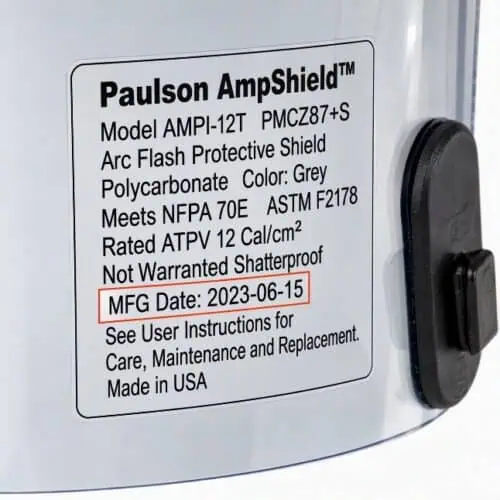
When inspecting a face shield, check the product label or markings for a manufacturing date or date code, if provided by the manufacturer. This information can help determine the age of the shield and provide useful context when evaluating its condition and service history. However, the manufacturing date should not be treated as an automatic expiration date unless the manufacturer specifies a defined service life or replacement interval.
Safety programs should therefore combine the shield’s age with routine inspection, its condition, exposure and use history, and the manufacturer’s specific instructions regarding care, maintenance, useful life, and replacement.
Make Replacement Part of the Safety Strategy
High-quality PPE can deliver long-term value, but durability does not eliminate the need for inspection. A strong PPE program combines appropriate equipment selection with proper care and timely retirement when equipment no longer meets applicable requirements or manufacturer criteria.
Don’t keep PPE in service simply because it still looks usable at a glance. Inspect it, maintain it, and replace it when its condition no longer supports safe, reliable use.