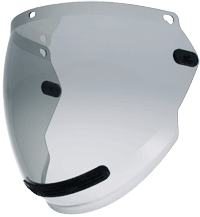
Firefighting is a dangerous profession, and firefighters require specialized protective gear to keep themselves safe while responding to emergencies. Effective firefighter PPE must be designed to perform reliably in extreme environments. To ensure optimal protection, safety standards have been developed to regulate the design, performance, and testing of personal protective equipment (PPE). These standards are developed and maintained by the National Fire Protection Association (NFPA) and the American National Standards Institute (ANSI) and are updated on a regular basis to keep up with advancements in technology and changes in the industry.
This blog will explain key safety standards that apply to firefighter PPE, including NFPA 1971, NFPA 1977, NFPA 1951, and ANSI Z87.1
What Threats Are Common in Fire and Rescue Operations?
Firefighters encounter many hazards while in the field. Besides extreme heat and smoke, they may face other dangers such as chemical, biological, radiological, nuclear, and high-yield explosives (CBRNE). Dealing with such dangerous elements requires proper PPE to ensure safety in extreme conditions.
What Safety Standards Does PPE for Firefighters Need To Meet?
PPE for firefighters must meet established safety standards to ensure it provides consistent protection across a wide range of emergency scenarios. To address the different environments firefighters operate in, multiple standards apply depending on the type of incident. Structural firefighting, wildland firefighting, technical rescue, and eye and face protection are each governed by specific requirements that together form a comprehensive framework for firefighter safety.
NFPA Standards
There are three key NFPA standards that apply to firefighter PPE, including:
- NFPA 1971: Standard on Protective Ensembles for Structural and Proximity Firefighting. NFPA 1971 outlines the minimum requirements for structural firefighting PPE, including helmets, gloves, boots, turnout coats and pants, and self-contained breathing apparatus (SCBA). It also sets requirements for the design, construction, and performance of PPE to ensure that firefighters are protected from thermal, physical, and environmental hazards they may face while on the job.
- NFPA 1977: Standard on Protective Clothing and Equipment for Wildland Firefighting. NFPA 1977 specifies the minimum requirements for PPE used by firefighters during wildland firefighting operations. Wildland firefighting involves responding to fires in rural or wilderness areas, where firefighters face different hazards than they do in urban or suburban settings.
- NFPA 1951: Standard on Protective Ensembles for Technical Rescue Incidents. NFPA 1951 is the standard for protective ensembles used in technical rescue incidents. Technical rescue incidents involve responding to emergencies such as confined space rescue, high-angle rescue, and trench rescue. The standard specifies the minimum requirements for PPE, including helmets, gloves, boots, and full-body harnesses, used by firefighters during technical rescue operations.
ANSI Standard
In addition to NFPA standards, firefighter eye and face protection must meet requirements set by the American National Standards Institute (ANSI). ANSI Z87.1 establishes performance criteria for occupational eye and face protection in the United States.
ANSI Z87.1 outlines requirements for impact resistance, optical clarity, coverage, fit, and durability. Firefighters rely on ANSI Z87.1 face shields, goggles, and other protective eyewear to help protect against dust, flying debris, chemical splashes, and other eye hazards encountered during fire and rescue operations. Compliance with ANSI Z87.1 ensures eye protection functions as primary protective equipment in demanding environments.
How Paulson’s Firefighter PPE Ensures Compliance in the Field
NFPA 1971, 1977, and 1951 outline specific performance requirements for firefighter PPE that address protection, durability, and wearability. These standards define how PPE for firefighters must perform to help protect against a range of hazards encountered in structural and wildland environments.
Key PPE requirements outlined in NFPA standards include:
 Thermal Protection. PPE must provide a minimum level of protection from heat and flames, using materials that withstand high temperatures without melting or causing burns.
 Water Resistance. PPE must offer a minimum level of water resistance to help protect against steam burns and related injuries.
 Visibility. PPE should include reflective trim or other visibility enhancements for low-light conditions.
 Impact Resistance. PPE must provide protection from falling objects and debris.
 Cut Resistance. PPE should help protect against sharp objects and tools.
 Durability. PPE must withstand repeated use, cleaning, and disinfection without loss of performance.
 Comfort. PPE should be comfortable to wear and allow freedom of movement while maintaining protection.
Paulson’s A-TAC® firefighter goggle was the first fire goggle on the market designed to meet the performance specifications of NFPA 1971, 1977, and 1951. As pre-tested PPE components, these goggles have undergone and passed thorough heat exposure testing and are engineered to address the specific needs of firefighters.
Key features of Paulson A-TAC® goggles include:
- Baffled top and bottom vents
- Anti-fog inner surfaces
- Hard-coated outer lenses
- Quick Strap tension adjustments
- Quick-release buckles
- Compatibility with helmets, spectacles, and hoods
By aligning design features and materials with the requirements defined in NFPA and ANSI standards, Paulson firefighter goggles support OEM safety compliance while supporting consistent protection in the field.
Be sure to read our firefighter PPE procurement checklist to learn how to select the optimal PPE for your situation.
Contact Paulson Manufacturing
Selecting compliant firefighter PPE requires a clear understanding of applicable safety standards. Paulson Manufacturing has decades of experience designing and manufacturing firefighter eye protection that aligns with NFPA and ANSI requirements while ensuring optimal comfort for the wearer. For more information about our protective gear, including NFPA 1971 goggles and other compliant solutions, contact Paulson Manufacturing or request a quote today.
Author

Latest entries
- May 9, 2025Arc Flash SafetyKey Considerations when Selecting the Right PPE for You
- April 30, 2025Arc Flash SafetyDeveloping a Comprehensive Arc Flash PPE Program: A Step-by-Step Guide
- March 18, 2025Arc Flash SafetyInjection Molded-to-Shape Face Shields: The Superior Choice for Industrial Workers
- February 26, 2025Firefighter SafetyThe Critical Role of Wildland Goggles in Firefighter Eye Protection